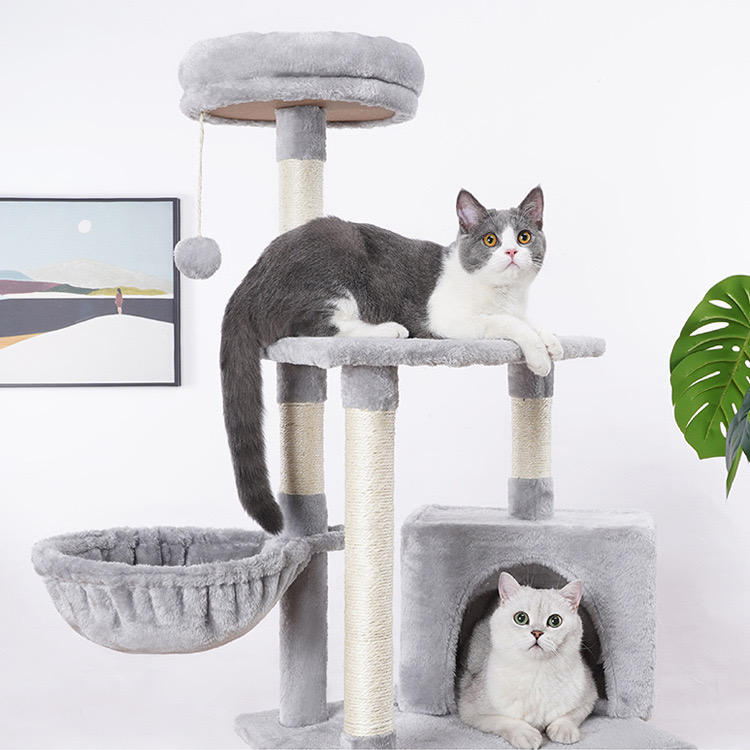
Many new cat owners struggle with this question when buying supplies for their feline companions: what’s the difference between a cat tree and a cat bed? Can you skip the other if you buy one? From the outside, one is a large, multi-layered item, and the other is a soft, small bed—seemingly different in purpose, yet many people still hesitate about which to prioritize. In fact, these two types of products cater to different instinctive needs and lifestyles of cats. Understanding their functional positioning is crucial for making a more informed purchasing decision.
First, in terms of functional attributes, the core function of a cat bed is “rest and warmth.” It’s usually a closed or semi-closed structure with a soft interior, providing cats with a sense of security and comfort, especially in cold weather or when cats are stressed, making it their preferred sleeping space. Cat beds emphasize quiet, stability, and a feeling of being enveloped.
On the other hand, the core function of a cat tree is “exercise and energy expenditure.” Cats are naturally inclined to climb and occupy high places, making vertical space very important to them. Cat trees, with their multi-tiered platforms, pillars, and jumping structures, allow cats to jump, climb, and sharpen their claws, releasing energy and fulfilling their hunting instincts. They are not just toys, but also environmental enrichment tools, helping to alleviate boredom and stress.
Secondly, from a behavioral perspective, cat beds satisfy the “hiding instinct,” as cats need relatively secluded spaces when sleeping or resting; while cat trees satisfy the “high-point instinct,” as cats enjoy observing their surroundings from a high vantage point, which gives them a sense of security and control. Therefore, one provides lateral comfort, while the other provides vertical activity space, serving entirely different purposes.
Furthermore, from a practical household perspective, if space is limited or the cat is quiet and not very active, a separate cat bed may suffice. However, if the cat is energetic and frequently scratches sofas, jumps on windowsills, or engages in nighttime running, then the benefits of cat trees are significant. They not only distract the cat from destructive behavior towards furniture but also provide a dedicated scratching area, reducing furniture damage.
Furthermore, cat trees are especially beneficial for multi-cat households. Multi-level structures can create distinct territorial boundaries at different heights, reducing conflict between cats. Cat beds, in multi-cat environments, primarily serve as individual resting spaces, and their number should generally match the number of cats.
Cat beds prioritize rest and security, while cat trees fulfill the needs for exercise, climbing, and scratching. They are not substitutes but complementary. If a cat is active and loves to jump, a cat tree, which occupies vertical space, is more necessary; if it’s quiet and prefers to curl up and sleep, a comfortable cat bed is indispensable. Choosing pet supplies based on the cat’s personality, age, and available space ensures you buy truly practical rather than unused items.